 a.k
RAO: Recursive Agent Orchestrator
Dec 18, 2025
A sophisticated recursive architecture that spawns and manages LLM-driven agents via a master-delegator model in the form of layers — much like neural network layers — with task-specific prompt tuning, execution constraints, and multi-agent recursion without human intervention.
#Architecture
#How It Works
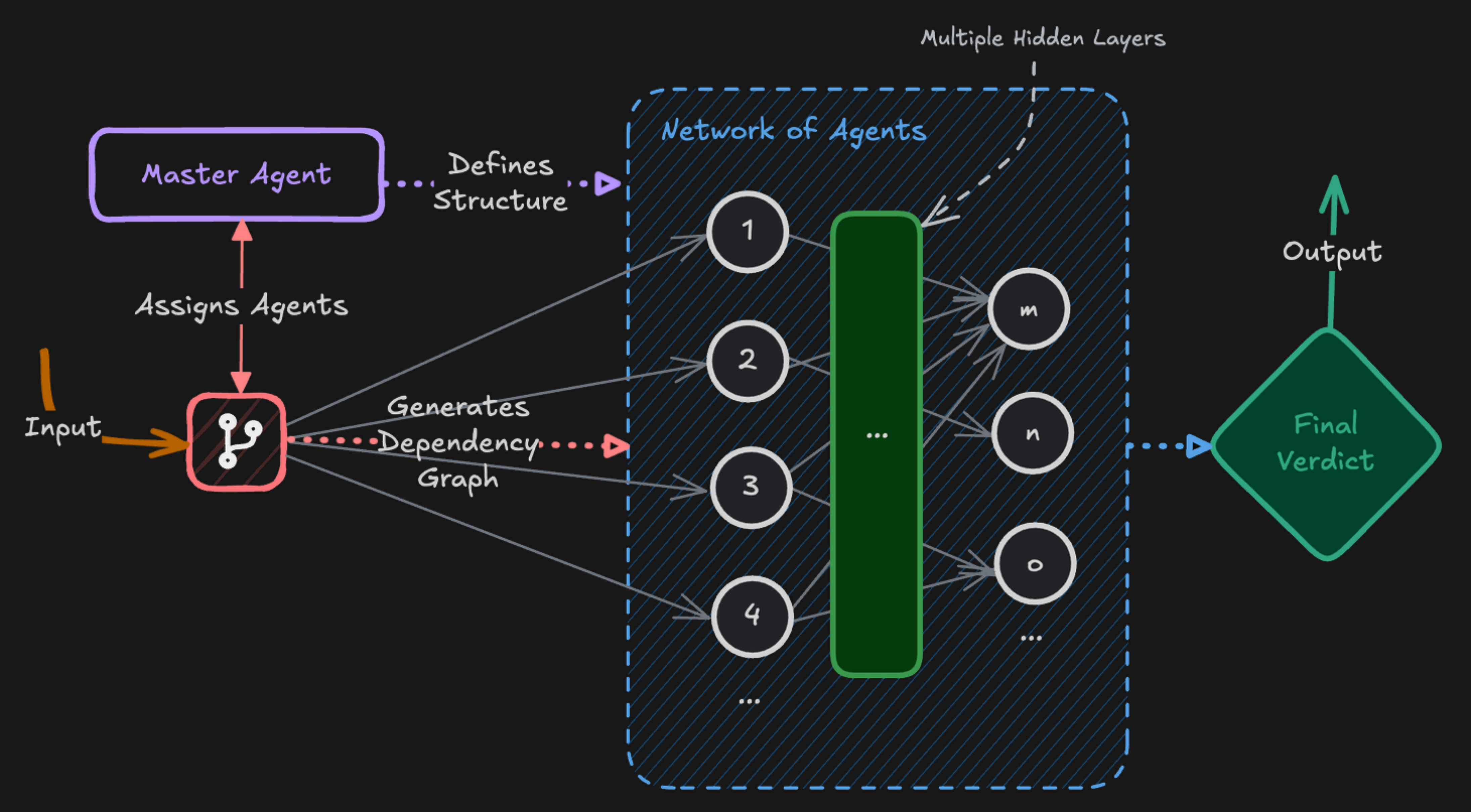
The system follows a recursive workflow:
- Task Analysis: The
Master Agentanalyzes the input and generates a comprehensive task breakdown with dependency structure - Agent Creation: For each subtask, the
Master Agentspawns a specializedChild Agentwith custom, fine-tuned prompts and dependency context Recursive Delegation: Child Agents work on their tasks and can create their own Sub-Child Agents when further specialization is needed- Layer Coordination: Child Agents are rearranged based on the dependency graph and coordinate with other agents while sharing context
Hierarchical Results: Results flow back up the hierarchy for integration and final output- Layered Synthesis: Results flow through layers of agents with shared context and are interpreted into a final output
The key innovation is that agent creation and prompt engineering happen automatically at runtime in layers, with no predefined agent structures or human-designed prompts.
#Caveats
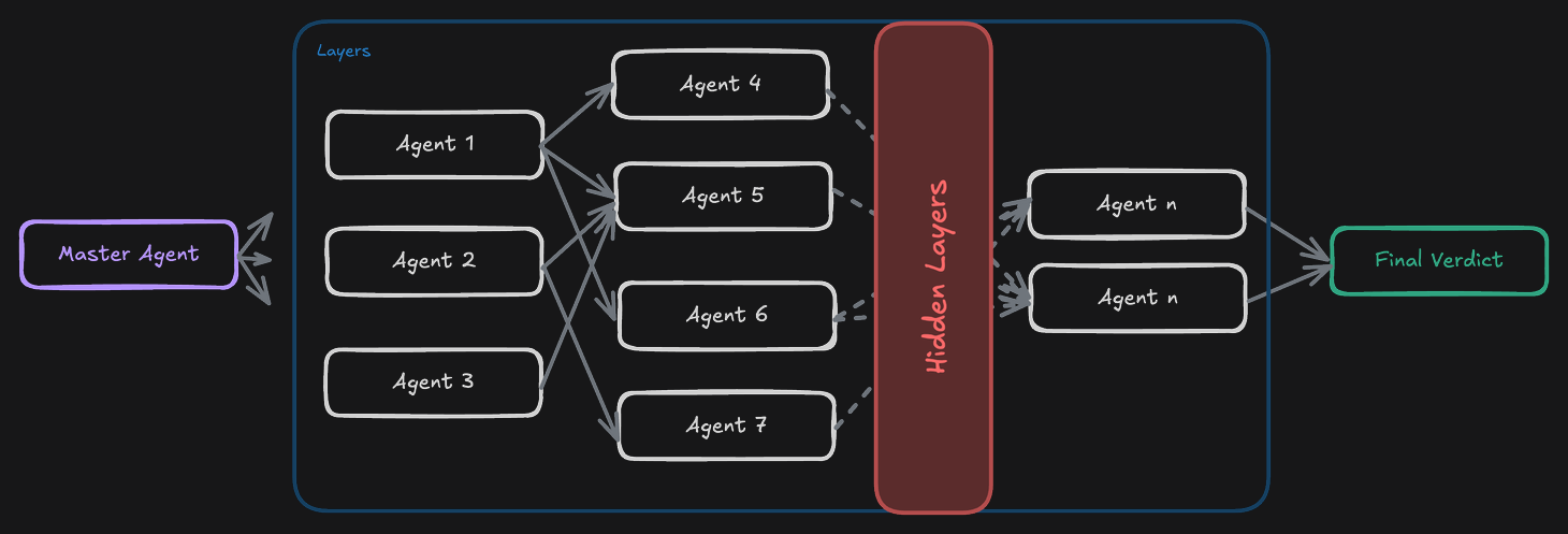
The system runs on a recursive layers method, building agents upon agents as needed. This can result in complex agent layer networks as shown below:
#Citations & Resources
-
Emergence AI's 2025 Orchestrator
Automatically creates agents and assembles multi-agent systems with minimal human intervention, continuously refining tools through recursive self-improvement. -
ReDel's Recursive Systems (2024)
Introduces systems where a root agent "decomposes tasks into subtasks then delegates to sub-agents" rather than using human-defined agent graphs. -
Beyond Better's Orchestrator (2025)
Implements "sub-agents created with specialized capabilities for token efficiency and parallel processing" through dynamic task analysis.